
Lithium Battery Grades Explained: A+, A, and B Cells
Lithium batteries are often sold as Grade A+, Grade A, or Grade B cells, but many buyers don’t fully understand what these labels mean.
5/1/20266 min read


Lithium batteries are often sold as Grade A+, Grade A, or Grade B cells, but many buyers don’t fully understand what these labels mean.
The grade of a lithium battery directly affects performance, lifespan, reliability, and price. Choosing the wrong grade can result in batteries that degrade quickly or fail earlier than expected.
Lithium batteries are often sold as Grade A+, Grade A, or Grade B cells, but many buyers don’t fully understand what these labels mean.
The grade of a lithium battery directly affects performance, lifespan, reliability, and price. Choosing the wrong grade can result in batteries that degrade quickly or fail earlier than expected.
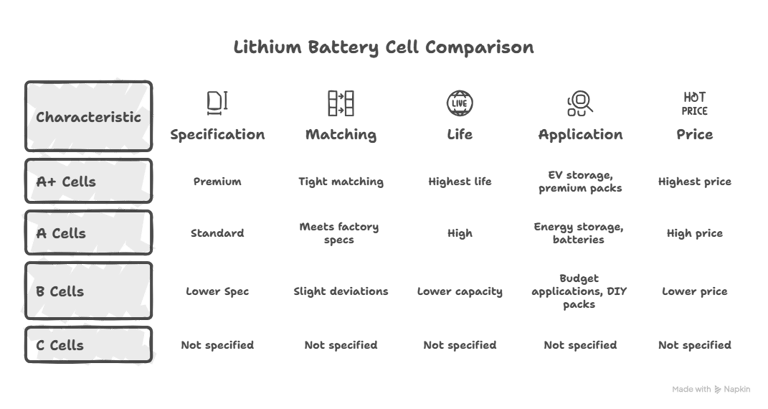
Lithium Battery Grade A+
Grade A+ lithium cells are usually selected Grade A cells with tighter matching and consistency. A+ is not an official industry standard. Many suppliers use this label to indicate better matching cells. Because of tighter quality selection, A+ cells can be slightly more expensive than standard Grade A cells.
Typical characteristics
Same production batch
Very consistent capacity
Very low internal resistance variation
Optimized for battery pack assembly


Applications
Electric vehicles, Solar energy storage, High-performance battery packs, Professional battery manufacturing
Lithium Battery Grade A
Grade A cells are the standard used in most commercial battery products. These cells meet the manufacturer’s full specifications and offer reliable performance and long cycle life. Grade A batteries cost more than lower grades, but provide better reliability and longer lifespan.
Typical characteristics
Full rated capacity
Stable voltage
Low internal resistance
Long lifespan
Factory certified


Applications
Solar storage systems, Electric bikes, Consumer electronics, Power tools,Backup battery systems
Lithium Battery Grade B
Grade B cells are cells that do not fully meet Grade A specifications. This does not always mean they are defective — they simply fall outside the optimal performance range. They may have Shorter lifespan, Greater variation between cells, Higher risk of early degradation.
The price difference between A-grade and B-grade lithium cells is not fixed. In practice it often ranges from 20% to 50%, but in some markets recycled or surplus B-grade cells may be even cheaper


Typical characteristics
Slightly lower capacity
Higher internal resistance
Cosmetic imperfections
Minor voltage differences
Applications
DIY battery packs, Budget electronics, Experimental projects, Secondary storage systems
Why Lithium Battery Grades Affect Price
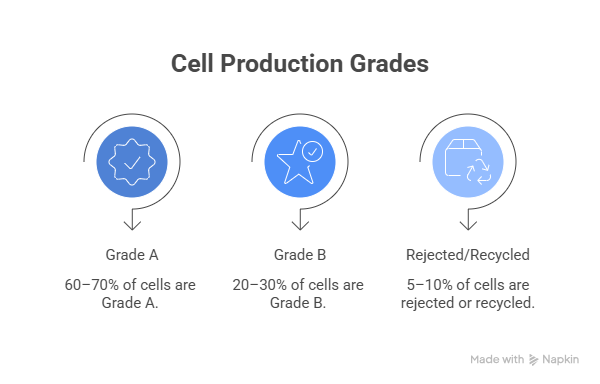
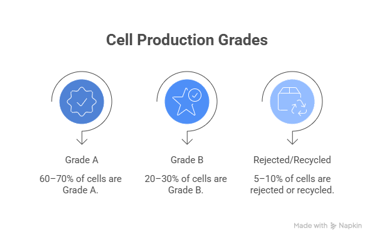
Battery grading directly impacts production yield. Not every manufactured battery cell meets premium specifications.

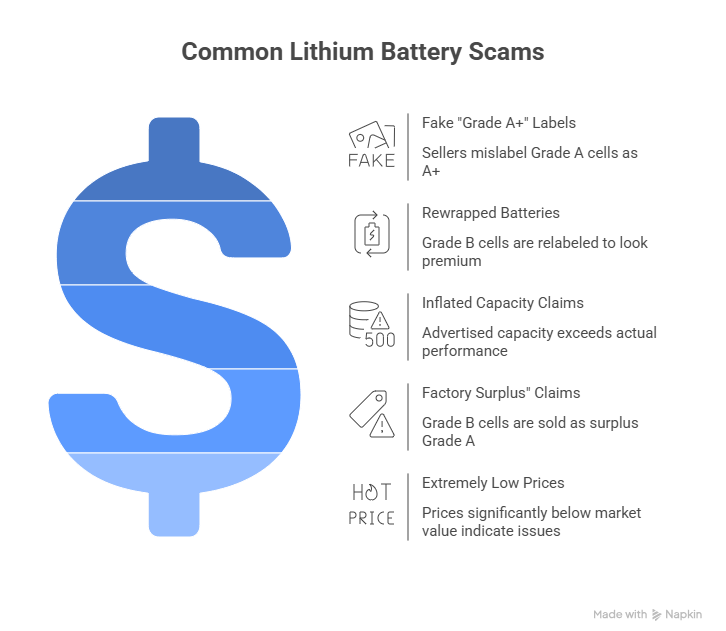
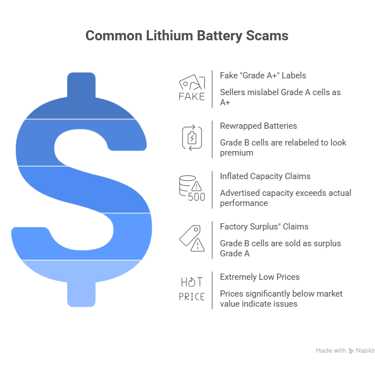
Common Lithium Battery Marketing Tricks (What Buyers Should Watch Out For)
The lithium battery market has many misleading marketing terms
Trick 1: Fake “Grade A+” Labels
Many sellers label batteries as A+ grade even when they are simply normal Grade A cells.
Since A+ is not an official standard, it is often used as a marketing term.
What to check:
Manufacturer documentation
Batch numbers
Capacity test reports
Trick 2: Rewrapped Batteries
Some sellers purchase Grade B cells and rewrap them with new labels to appear like premium cells.
Signs of rewrapped batteries:
Missing manufacturer markings
Inconsistent labels
Suspiciously low prices
Trick 3: Inflated Capacity Claims
Some sellers advertise batteries with capacity higher than the real value.
Example:
Advertised: 5000 mAh
Actual capacity: 3200–3500 mAh
Always check independent testing results when possible.
Trick 4: “Factory Surplus” Claims
Some sellers claim batteries are “factory surplus Grade A cells”.
Often these are actually Grade B cells sold through secondary markets.
Trick 5: Extremely Low Prices
If a lithium battery is much cheaper than the market price, it may be:
B-grade cells
Recycled cells
Used cells recovered from battery packs
How to Choose the Right Lithium Battery Grade
The best battery grade depends on your use case and budget.
Choose Grade A or A+ if:
Reliability is important
The battery will be used for many years
The battery pack requires matched cells
Choose Grade B if:
Cost is the main priority
Lifespan requirements are lower
The battery is used for experimental projects
Key Takeaway
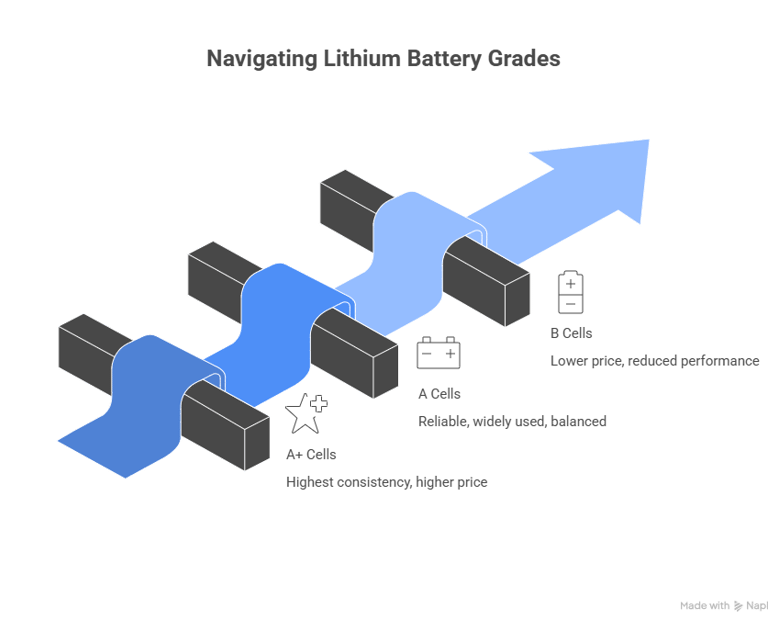
Lithium battery grading helps buyers understand cell quality and consistency.
A+ cells → highest consistency
A cells → reliable and widely used
B cells → lower price but reduced performance
Understanding these differences helps buyers balance price, reliability, and lifespan when purchasing lithium batteries.

Lithium batteries are often sold as Grade A+, Grade A, or Grade B cells, but many buyers don’t fully understand what these labels mean.
The grade of a lithium battery directly affects performance, lifespan, reliability, and price. Choosing the wrong grade can result in batteries that degrade quickly or fail earlier than expected.
Lithium batteries are often sold as Grade A+, Grade A, or Grade B cells, but many buyers don’t fully understand what these labels mean.
The grade of a lithium battery directly affects performance, lifespan, reliability, and price. Choosing the wrong grade can result in batteries that degrade quickly or fail earlier than expected.
Lithium Battery Grade A+
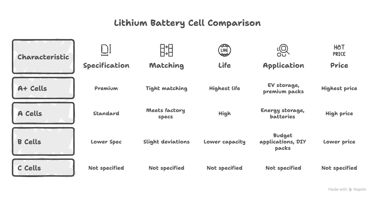
Grade A+ lithium cells are usually selected Grade A cells with tighter matching and consistency. A+ is not an official industry standard. Many suppliers use this label to indicate better matching cells. Because of tighter quality selection, A+ cells can be slightly more expensive than standard Grade A cells.
Typical characteristics
Same production batch
Very consistent capacity
Very low internal resistance variation
Optimized for battery pack assembly
Applications
Electric vehicles, Solar energy storage, High-performance battery packs, Professional battery manufacturing
Lithium Battery Grade A
Grade A cells are the standard used in most commercial battery products. These cells meet the manufacturer’s full specifications and offer reliable performance and long cycle life. Grade A batteries cost more than lower grades, but provide better reliability and longer lifespan.
Typical characteristics
Full rated capacity
Stable voltage
Low internal resistance
Long lifespan
Factory certified
Applications
Solar storage systems, Electric bikes, Consumer electronics, Power tools,Backup battery systems
Lithium Battery Grade B
Grade B cells are cells that do not fully meet Grade A specifications. This does not always mean they are defective — they simply fall outside the optimal performance range. They may have Shorter lifespan, Greater variation between cells, Higher risk of early degradation.
The price difference between A-grade and B-grade lithium cells is not fixed. In practice it often ranges from 20% to 50%, but in some markets recycled or surplus B-grade cells may be even cheaper

Typical characteristics
Slightly lower capacity
Higher internal resistance
Cosmetic imperfections
Minor voltage differences
Applications
DIY battery packs, Budget electronics, Experimental projects, Secondary storage systems
Why Lithium Battery Grades Affect Price
Battery grading directly impacts production yield. Not every manufactured battery cell meets premium specifications.
Common Lithium Battery Marketing Tricks (What Buyers Should Watch Out For)
The lithium battery market has many misleading marketing terms
Trick 1: Fake “Grade A+” Labels
Many sellers label batteries as A+ grade even when they are simply normal Grade A cells.
Since A+ is not an official standard, it is often used as a marketing term.
What to check:
Manufacturer documentation
Batch numbers
Capacity test reports
Trick 2: Rewrapped Batteries
Some sellers purchase Grade B cells and rewrap them with new labels to appear like premium cells.
Signs of rewrapped batteries:
Missing manufacturer markings
Inconsistent labels
Suspiciously low prices
Trick 3: Inflated Capacity Claims
Some sellers advertise batteries with capacity higher than the real value.
Example:
Advertised: 5000 mAh
Actual capacity: 3200–3500 mAh
Always check independent testing results when possible.
Trick 4: “Factory Surplus” Claims
Some sellers claim batteries are “factory surplus Grade A cells”.
Often these are actually Grade B cells sold through secondary markets.
Trick 5: Extremely Low Prices
If a lithium battery is much cheaper than the market price, it may be:
B-grade cells
Recycled cells
Used cells recovered from battery packs
How to Choose the Right Lithium Battery Grade
The best battery grade depends on your use case and budget.
Choose Grade A or A+ if:
Reliability is important
The battery will be used for many years
The battery pack requires matched cells
Choose Grade B if:
Cost is the main priority
Lifespan requirements are lower
The battery is used for experimental projects
Key Takeaway
Lithium battery grading helps buyers understand cell quality and consistency.
A+ cells → highest consistency
A cells → reliable and widely used
B cells → lower price but reduced performance
Understanding these differences helps buyers balance price, reliability, and lifespan when purchasing lithium batteries.
Our Office
Guangzhou, tianhe district, lin he xi lu 167 , office 1445 M870
Contacts


Moonday
Because every day is a Moonday