
From Light to Life: How Electricity Powers Wealth and Longevity
What does flipping a light switch have to do with how long you live? This post explores the powerful link between electricity access, economic growth, and life expectancy—and why hundreds of millions are still missing the first step to development.
3/26/20265 min read
⚡ Electricity, Wealth, and Longevity
How energy access shapes GDP and life expectancy
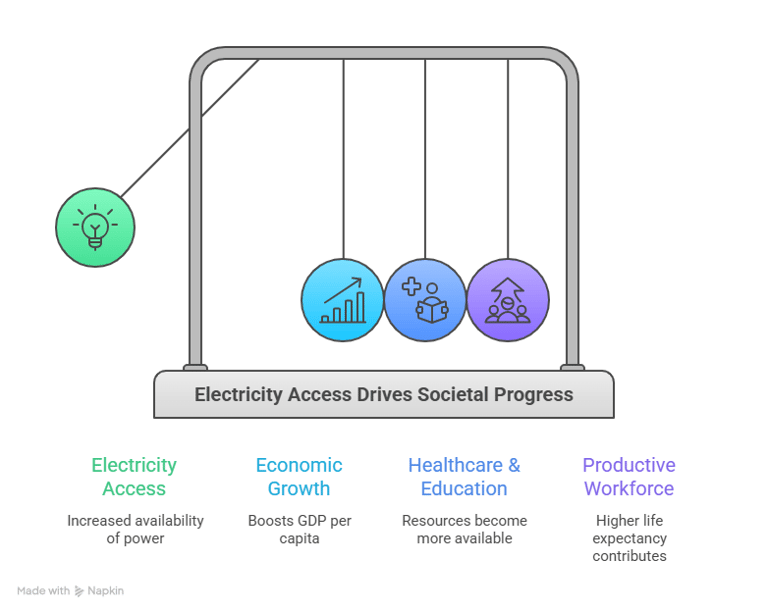
It’s easy to take electricity for granted. Flip a switch, charge a phone, store food, work online. But globally, access to electricity is still uneven—and where it exists (or doesn’t), it strongly mirrors how people live, earn, and how long they live.


This blog explores a powerful triangle:
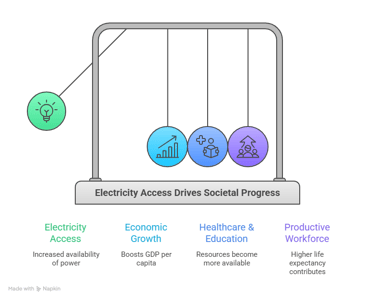
Electricity access ↔ GDP per capita ↔ Life expectancy
🌍 1. Electricity and Economic Growth (GDP)
One of the clearest relationships in development economics is between electricity access and GDP per capita.
Here’s a real dataset visualization:
👉 View interactive graph: Electricity access vs GDP per capita
What the data shows:
Countries with low electricity access (<50%) tend to have very low GDP per capita
Countries with near-universal access (~100%) almost always have higher incomes
The relationship is not perfectly linear—but it’s strongly upward
As of the latest 2025 energy report, about **92% of the global population has access to electricity—but in low-income countries, access remains around just 45%, highlighting a persistent and deeply unequal energy divide
Why this happens:
Electricity enables:
Industrial production
Digital economies
Services and infrastructure
Historically, economic growth has been tightly linked to rising electricity use, especially during industrialization
👉 In simple terms:
No electricity → limited economic activity → low GDP
❤️ 2. GDP and Life Expectancy
Now let’s connect income to health.
There’s a famous global pattern (often called the Preston Curve):
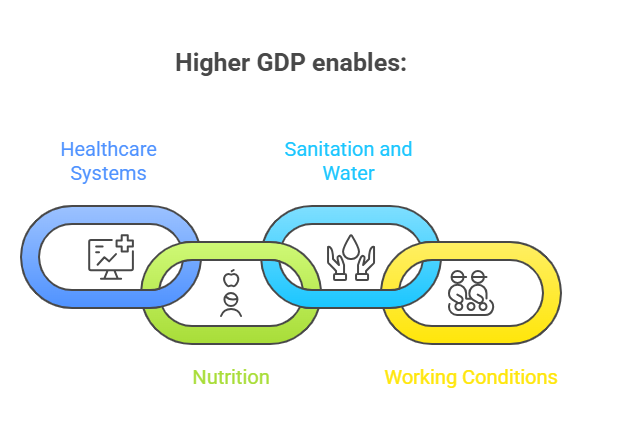
Richer countries → longer lives
👉 Explore global GDP vs life expectancy (Gapminder)
What the data shows:
At very low incomes, small increases in GDP lead to huge gains in life expectancy
After a certain point, gains slow down (diminishing returns)
High-income countries cluster around 75–85+ years
Research consistently finds a positive correlation between GDP per capita and life expectancy
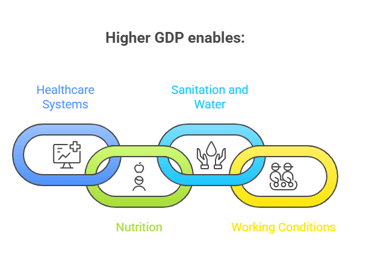
Why income affects lifespan:
⚡➡️❤️ 3. Electricity and Life Expectancy (The Hidden Link)
Now the interesting part: electricity doesn’t just affect income—it directly affects health.
Studies show energy use and access are positively correlated with life expectancy
Mechanisms:
Electricity enables:
Hospitals (equipment, vaccines, emergency care)
Clean cooking (less indoor air pollution)
Refrigeration (safe food & medicine)
Information access (health knowledge)
There’s also a “threshold effect”:
Early increases in energy access → big improvements in life expectancy
Beyond a certain level → smaller gains
📊 4. The Big Picture
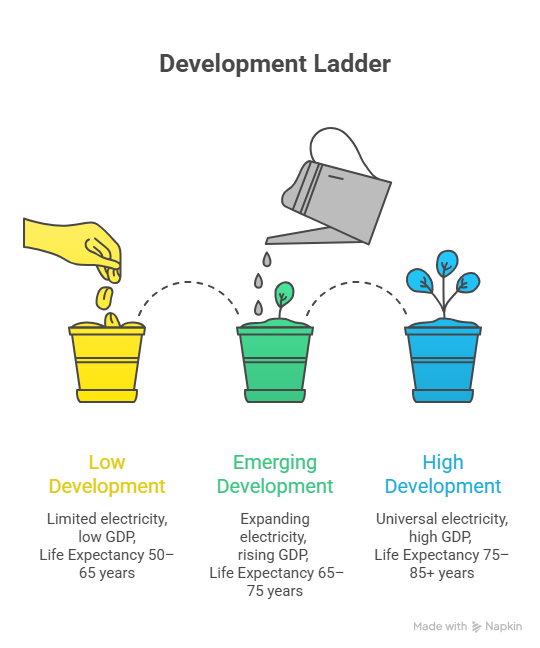
Electricity is often the first step that unlocks the others
⚠️ 5. Important Nuance: It’s Not Just Electricity
Before we oversimplify:
Some countries have electricity but still struggle economically
Others have high GDP but health inequality issues
At high income levels, more energy doesn’t always mean better lives
In fact, at very high development levels, additional energy use brings diminishing returns for well-being
🧠 Final Insight
If you had to summarize the relationship:
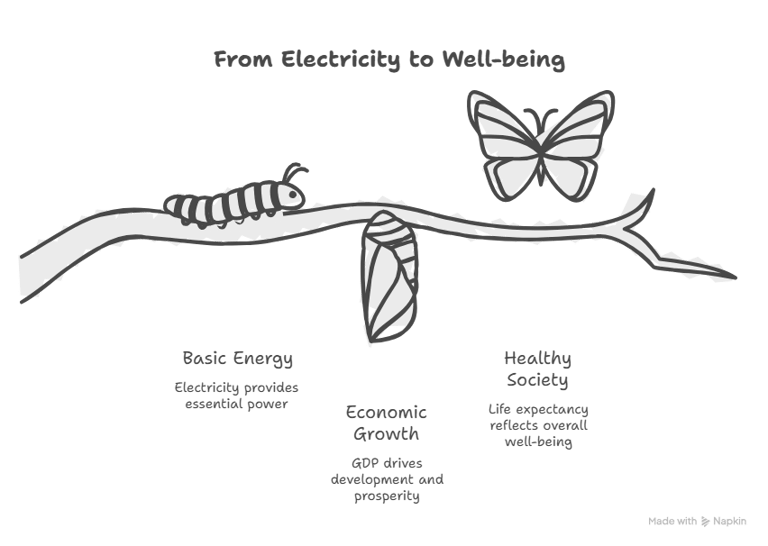
Electricity enables productivity → productivity drives income → income improves health and longevity
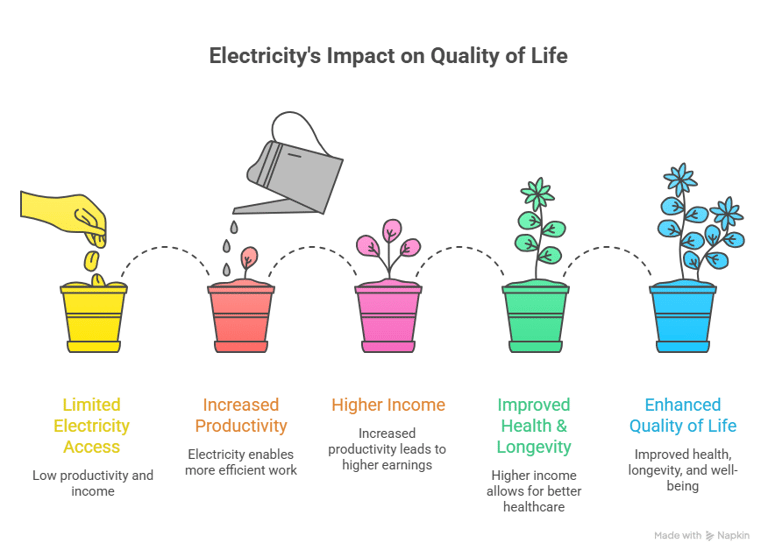
Or even simpler:
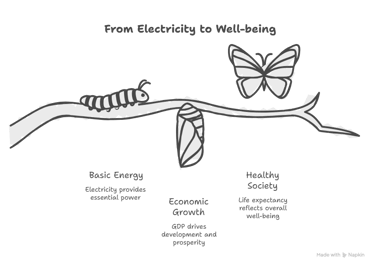
⚡ Electricity is the foundation
💰 GDP is the engine
❤️ Life expectancy is the outcome
💡 Closing Thought
One of the most striking facts:
Around 600 million people still live without electricity today
Which means hundreds of millions are still locked out of the very first step on the development ladder.


⚡ Electricity, Wealth, and Longevity
How energy access shapes GDP and life expectancy
It’s easy to take electricity for granted. Flip a switch, charge a phone, store food, work online. But globally, access to electricity is still uneven—and where it exists (or doesn’t), it strongly mirrors how people live, earn, and how long they live.
This blog explores a powerful triangle:
Electricity access ↔ GDP per capita ↔ Life expectancy
🌍 1. Electricity and Economic Growth (GDP)
One of the clearest relationships in development economics is between electricity access and GDP per capita.
Here’s a real dataset visualization:
👉 View interactive graph: Electricity access vs GDP per capita
What the data shows:
Countries with low electricity access (<50%) tend to have very low GDP per capita
Countries with near-universal access (~100%) almost always have higher incomes
The relationship is not perfectly linear—but it’s strongly upward
As of the latest 2025 energy report, about **92% of the global population has access to electricity—but in low-income countries, access remains around just 45%, highlighting a persistent and deeply unequal energy divide
Why this happens:
Electricity enables:
Industrial production
Digital economies
Services and infrastructure
Historically, economic growth has been tightly linked to rising electricity use, especially during industrialization
👉 In simple terms:
No electricity → limited economic activity → low GDP
❤️ 2. GDP and Life Expectancy
Now let’s connect income to health.
There’s a famous global pattern (often called the Preston Curve):
Richer countries → longer lives
👉 Explore global GDP vs life expectancy (Gapminder)
What the data shows:
At very low incomes, small increases in GDP lead to huge gains in life expectancy
After a certain point, gains slow down (diminishing returns)
High-income countries cluster around 75–85+ years
Research consistently finds a positive correlation between GDP per capita and life expectancy
Why income affects lifespan:
⚡➡️❤️ 3. Electricity and Life Expectancy (The Hidden Link)
Now the interesting part: electricity doesn’t just affect income—it directly affects health.
Studies show energy use and access are positively correlated with life expectancy
Mechanisms:
Electricity enables:
Hospitals (equipment, vaccines, emergency care)
Clean cooking (less indoor air pollution)
Refrigeration (safe food & medicine)
Information access (health knowledge)
There’s also a “threshold effect”:
Early increases in energy access → big improvements in life expectancy
Beyond a certain level → smaller gains
📊 4. The Big Picture
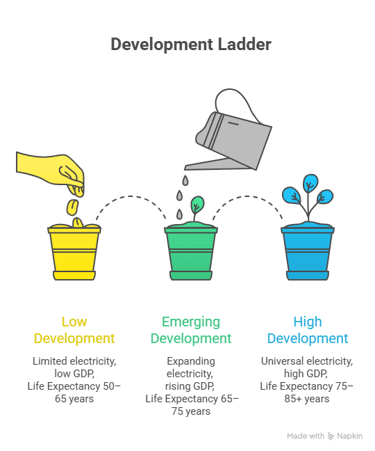
Electricity is often the first step that unlocks the others
⚠️ 5. Important Nuance: It’s Not Just Electricity
Before we oversimplify:
Some countries have electricity but still struggle economically
Others have high GDP but health inequality issues
At high income levels, more energy doesn’t always mean better lives
In fact, at very high development levels, additional energy use brings diminishing returns for well-being
🧠 Final Insight
If you had to summarize the relationship:
Electricity enables productivity → productivity drives income → income improves health and longevity
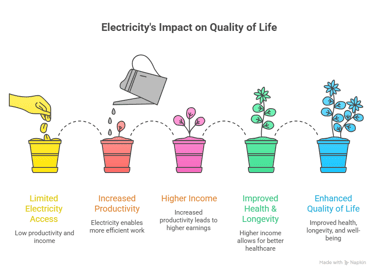
Or even simpler:
⚡ Electricity is the foundation
💰 GDP is the engine
❤️ Life expectancy is the outcome
💡 Closing Thought
One of the most striking facts:
Around 600 million people still live without electricity today
Which means hundreds of millions are still locked out of the very first step on the development ladder.

Our Office
Guangzhou, tianhe district, lin he xi lu 167 , office 1445 M870
Contacts


Moonday
Because every day is a Moonday