
100% DoD
Can LiFePO₄ Batteries Really Deliver 100% Depth of Discharge (DoD) in Home Energy Storage Systems?
11/20/20256 min read

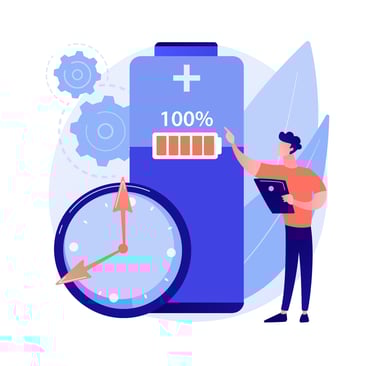
LiFePO₄ batteries—also known as LFP batteries—have become one of the most popular choices for home solar storage systems, backup power, and off-grid applications. A major selling point is the claim that they can provide 100% Depth of Discharge (DoD). But what does that really mean, and is it accurate?
If you're researching the best battery for a home energy system, understanding the truth behind “100% DoD” is essential for long-term performance, reliability, and ROI.
What Is Depth of Discharge (DoD)?
A battery’s lifespan is often measured in charge/discharge cycles until it falls below a given capacity (e.g. 80% of original). Crucially, how “deep” those cycles are makes a big difference. In general, shallower cycles (low DoD) allow many more cycles before degradation.
Every time you discharge a battery, its cells undergo stress. Deeper discharges (high DoD) strain the electrodes and increase internal resistance. Over time, this stress accumulates and the battery capacity fades faster. In plain terms: more of the battery used per cycle means more wear per cycle. Even charging to 100% each time can hurt longevity (higher voltage stresses the cell)
LiFePO₄ batteries—also known as LFP batteries—have become one of the most popular choices for home solar storage systems, backup power, and off-grid applications. A major selling point is the claim that they can provide 100% Depth of Discharge (DoD). But what does that really mean, and is it accurate?
If you're researching the best battery for a home energy system, understanding the truth behind “100% DoD” is essential for long-term performance, reliability, and ROI.
What Is Depth of Discharge (DoD)?
A battery’s lifespan is often measured in charge/discharge cycles until it falls below a given capacity (e.g. 80% of original). Crucially, how “deep” those cycles are makes a big difference. In general, shallower cycles (low DoD) allow many more cycles before degradation.
Every time you discharge a battery, its cells undergo stress. Deeper discharges (high DoD) strain the electrodes and increase internal resistance. Over time, this stress accumulates and the battery capacity fades faster. In plain terms: more of the battery used per cycle means more wear per cycle. Even charging to 100% each time can hurt longevity (higher voltage stresses the cell)
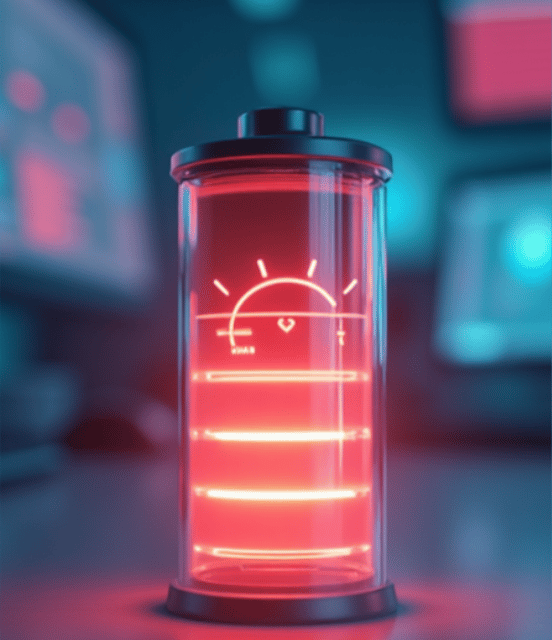
Shallower discharges prolong battery life by reducing stress on the electrodes, allowing for significantly more charge/discharge cycles before reaching a critical degradation point.
Deeper discharges place greater stress on the battery's internal components, leading to faster wear and increased internal resistance, which diminishes performance over time.
Utilizing more capacity per cycle accelerates the degradation process, ultimately leading to a faster reduction in the battery's total capacity
Shallower discharges prolong battery life by reducing stress on the electrodes, allowing for significantly more charge/discharge cycles before reaching a critical degradation point.
Deeper discharges place greater stress on the battery's internal components, leading to faster wear and increased internal resistance, which diminishes performance over time.
Utilizing more capacity per cycle accelerates the degradation process, ultimately leading to a faster reduction in the battery's total capacity
How Deep Discharge Damages the Battery?
Stronger Material Stress
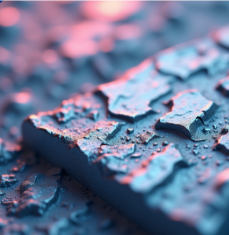
Deep discharges result in increased internal resistance in the battery. This higher resistance causes more energy to be wasted as heat instead of being delivered as usable power. The additional heat accelerates aging of the battery components, leading to faster degradation and reduced capacity.
Higher Resistance and Heat
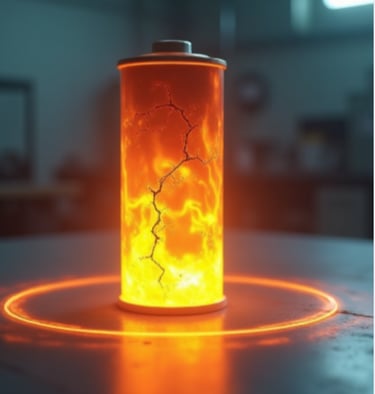
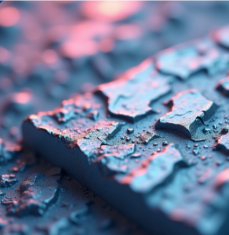
Deep discharges create additional material stress on the battery's electrodes. During these cycles, lithium can coat the anode in metallic deposits, known as lithium plating, and induce tiny cracks in the crystal structure. This damages the electrodes and traps lithium ions, leading to irreversible capacity loss.
How Deep Discharge Damages the Battery?
Stronger Material Stress
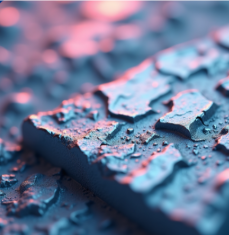
Deep discharges result in increased internal resistance in the battery. This higher resistance causes more energy to be wasted as heat instead of being delivered as usable power. The additional heat accelerates aging of the battery components, leading to faster degradation and reduced capacity.
Higher Resistance and Heat
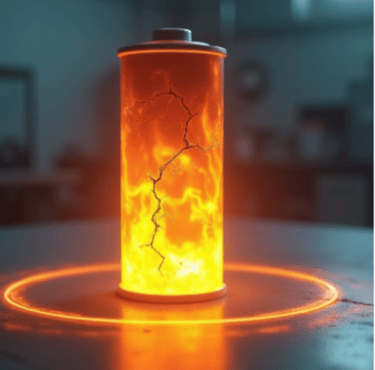
Deep discharges create additional material stress on the battery's electrodes. During these cycles, lithium can coat the anode in metallic deposits, known as lithium plating, and induce tiny cracks in the crystal structure. This damages the electrodes and traps lithium ions, leading to irreversible capacity loss.

YES: Full Usable Capacity Access
NO: Never Fully Drained to Zero Voltage
Home batteries, particularly LiFePO₄ types, are designed to maximize usable capacity while maintaining safety. The BMS is crucial for enhancing the lifespan and safety of batteries. The BMS ensures that users can access 100% of their rated usable capacity. It manages the charging process and enforces limits to prevent deep discharges that could damage the cells. This means you can fully utilize the energy stored without worrying about reducing the lifespan significantly, as long as the BMS is functioning correctly.
It's essential to note that although users can utilize the full rated capacity, the battery will never be completely drained to zero voltage. The BMS maintains a safety buffer to prevent damage to the cells from deep discharge. This safeguard helps ensure longevity and performance while allowing for full daily cycling within safe limits.


YES: Full Usable Capacity Access
NO: Never Fully Drained to Zero Voltage
Home batteries, particularly LiFePO₄ types, are designed to maximize usable capacity while maintaining safety. The BMS is crucial for enhancing the lifespan and safety of batteries. The BMS ensures that users can access 100% of their rated usable capacity. It manages the charging process and enforces limits to prevent deep discharges that could damage the cells. This means you can fully utilize the energy stored without worrying about reducing the lifespan significantly, as long as the BMS is functioning correctly.
It's essential to note that although users can utilize the full rated capacity, the battery will never be completely drained to zero voltage. The BMS maintains a safety buffer to prevent damage to the cells from deep discharge. This safeguard helps ensure longevity and performance while allowing for full daily cycling within safe limits.
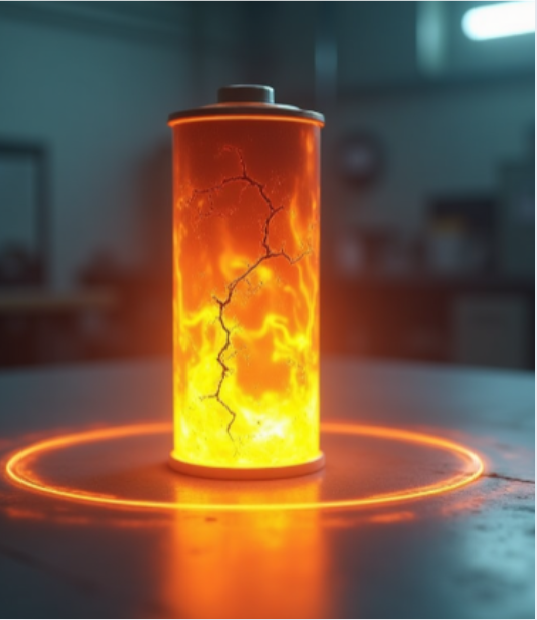
At deep discharge levels, lithium ions can stop intercalating into the anode and instead deposit as a metallic layer. This lithium plating ties up active lithium and raises the cell's resistance. Over time, it can form dendrites that risk short circuits, resulting in irreversible capacity loss with each deep cycle.
Deep discharges extract more lithium ions than the cathode's crystalline structure can handle, leading to severe strain. This results in cracks or partial collapse of the lattice, diminishing the amount of lithium it can hold after each cycle, particularly in high-energy NCM/NCA materials.
Every deep cycle thickens and decomposes the protective SEI layer on the anode, consuming lithium and electrolyte. Additionally, chemical breakdown of the electrolyte can produce gas or solids, blocking ion flow and increasing internal resistance, ultimately reducing battery capacity.
Lithium Plating on the Anode
Cathode Lattice Damage
Electrolyte/SEI Breakdown
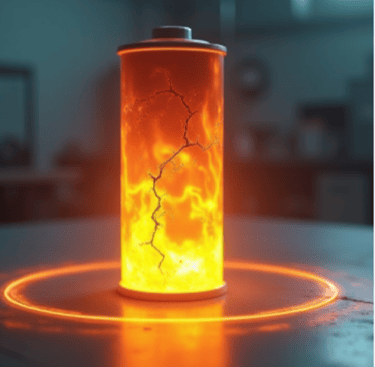
At deep discharge levels, lithium ions can stop intercalating into the anode and instead deposit as a metallic layer. This lithium plating ties up active lithium and raises the cell's resistance. Over time, it can form dendrites that risk short circuits, resulting in irreversible capacity loss with each deep cycle.
Deep discharges extract more lithium ions than the cathode's crystalline structure can handle, leading to severe strain. This results in cracks or partial collapse of the lattice, diminishing the amount of lithium it can hold after each cycle, particularly in high-energy NCM/NCA materials.
Every deep cycle thickens and decomposes the protective SEI layer on the anode, consuming lithium and electrolyte. Additionally, chemical breakdown of the electrolyte can produce gas or solids, blocking ion flow and increasing internal resistance, ultimately reducing battery capacity.
Lithium Plating on the Anode
Cathode Lattice Damage
Electrolyte/SEI Breakdown
The chemistry
Our Office
Guangzhou, tianhe district, lin he xi lu 167 , office 1445 M870
Contacts


Moonday
Because every day is a Moonday